Beige, Crackers, and Gumballs: The Month I Fired Myself as Editor
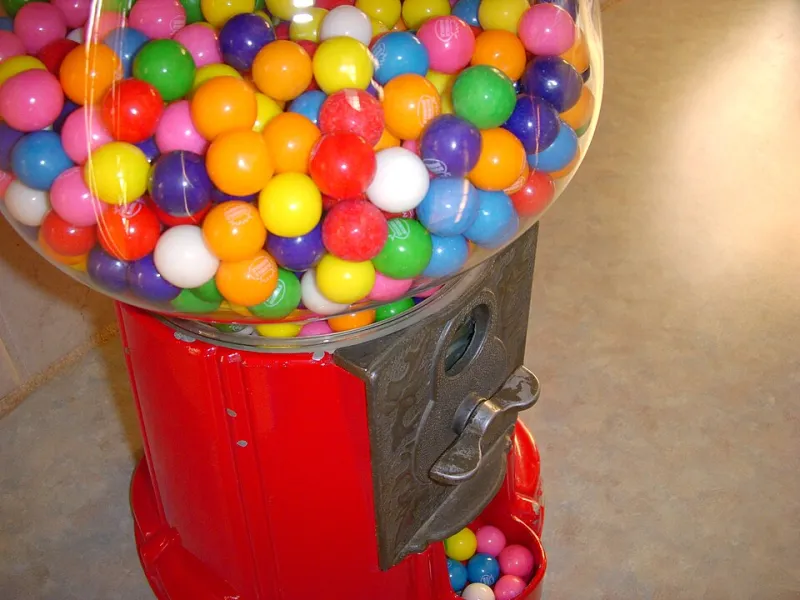
Photo: Julie Alexander from U.S., CC BY 2.0, via Wikimedia Commons
Every content strategist will tell you the same thing: know your audience, follow the data, serve the reader. I did none of that for four weeks. Instead, I numbered thirty story ideas, fed them to a random number generator I found in eleven seconds, and wrote whatever it spat out. This is the story of how a slot machine out-edited me.
The Rules of the Game
The setup was simple, which is good, because my judgment was about to be simple too. Every Monday, I'd generate a number between 1 and 30. Whatever idea lived at that number, I wrote. No vetoes. No swaps. No sneaking in a "well, actually, what I meant by 'beige' was a piece about interior design trends."
My editor-in-chief was a random number generator. My editorial standards were dice. In retrospect, this made me more qualified than half the newsletters in my inbox.
Week One: The Beige Era Begins
The first spin delivered idea number 14: a review of the color beige. Not beige paint. Not beige fashion. Beige itself, as a concept. I wrote 1,100 words about how beige is the internet's favorite color because beige is the color of a page that hasn't loaded yet, of placeholder text, of a website that gave up. It was, and I say this with genuine shame, the best thing I've written all year.
It outperformed my carefully researched piece on creator-economy burnout by a factor of four. Four. I had spent three weeks on that burnout piece. The beige article took one afternoon and a growing sense of dread.
Week Two: The Cracker Manifesto
The generator, showing off, produced an ode to unsalted crackers. I leaned in. Unsalted crackers, I argued, are the only food product that has never once lied to anyone. They promise nothing. They deliver it. In an internet full of clickbait, the unsalted cracker is the last honest publisher.
Readers loved it. One commenter said it was "weirdly moving." Another asked if I was okay. I was not okay. I was a man being outperformed by a cracker essay.
Week Three: Gumball Machine Economics
Idea number 7 was a business analysis of gumball machines, and here is where I have to admit the generator had a thesis. The quarter you spend on a gumball is the purest transaction on earth: no subscription, no upsell, no data harvesting, no consent banner. You put in a coin. You get a gumball. The transaction ends. Compare that to anything with a freemium model and tell me the gumball industrial complex isn't ahead of its time.
That piece got picked up and shared around by people who clearly assumed it was satire. It was not satire. It was a random number generator's honest opinion, laundered through me.
So Was My Judgment the Secret Ingredient?
Here's the uncomfortable math. In the month of the machine, traffic doubled. Not grew. Doubled. The two best-performing pieces of my year were selected by a random number generator in under a second, with less deliberation than I spend choosing a parking spot at Target.
The obvious takeaway is that editorial judgment is a scam and we should all bow before the dice. But I don't fully buy that, and not just because it would mean my career is a placebo. What the generator actually did was strip out my fear. Left to my own devices, I pick safe topics, topics that sound like work, topics with respectable keywords. The machine has no reputation to protect. The machine picked beige.
Maybe that's the real secret: not randomness, but permission. The dice let me write about crackers because the dice can't be embarrassed. I can.
The experiment is over. I'm back in charge of the calendar, which feels a bit like being handed back the keys after you've crashed. But idea number 22 is still on the list — "a review of the smell of hardware stores" — and the generator keeps whispering its number. I might listen. The algorithm has taste. It's questionable taste. But so was mine, apparently, and mine had a mortgage.