Trust Falls With Three Digits: How 299 Conned America Into Believing Things
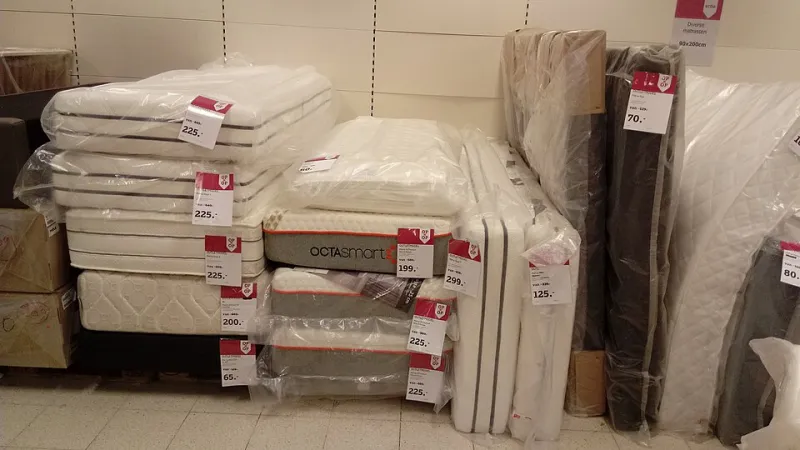
Photo: Donald Trung Quoc Don (Chữ Hán: 徵國單) - Wikimedia Commons - © CC BY-SA 4.0 International.(Want to use this image?)Original publication 📤: --Donald Trung 『徵國單』 (No Fake News 💬) (WikiProject Numismatics 💴) (Articles 📚) 13:48, 7 December 2021 (UTC), CC
There's a price tag psychology experiment happening in every strip mall in America, and nobody signed the consent form. Walk into any mattress store — and there is always a mattress store, they reproduce like fire ants — and you will see it: $299. Not $300. Not $299.99, which at least has the decency to be a recognizable con. Just 299. Round-ish. Confident. Trustworthy, somehow.
Now type ymlp299.net into your browser and tell me what your gut says. Suspicion. Mild alarm. A faint whiff of Nigerian prince. Same digits. Completely different verdict from the same skull-encased jury. What gives?
The Cult of the Credible Number
We've been trained, over roughly a century of American retail, to read three-digit numbers as receipts of legitimacy. Gas at $2.99. The iPhone launch price. Highway 299 in California, which sounds like a road that has been places. Three digits sit in a psychological sweet spot: big enough to seem established, small enough to feel like a deal. Four digits trigger the mortgage part of your brain. Two digits trigger the clearance rack.
Marketing people know this. They've known it since before your grandparents were born, back when Sears catalogs were the algorithm. The number 299 isn't a price — it's a costume that a number wears to a job interview.
But Then the Internet Got Hold of It
Here's where it curdles. The same heuristic that makes $299 feel like a fair shake makes ymlp299.net feel like a website that sells refurbished printers out of a garage in Reno. Because on the internet, numbers in domains don't signal legitimacy. They signal that the good name was taken, or that a bot generated this URL at 4 a.m. while the intern who registered it has long since moved to Portland.
So the number is doing a bit, and the context is the punchline. In a price, 299 whispers established. In a URL, it whispers abandoned. The digits never changed. The vibes did all the work.
Numerology for People Who Don't Believe in Numerology
You don't have to buy into numerology to admit that numbers carry baggage. Ask any American what 911 means versus what 411 means, and watch them instantly sort emergency from directory assistance without thinking. Ask them about 401(k) and feel their blood pressure respond. We are a country that has outsourced enormous amounts of emotional labor to numerals.
And 299? It's the middle child of the three-digit family. Not 100, with its founding-father gravitas. Not 999, which either means a gold purity rating or an emergency call depending on which side of the Atlantic you're on. 299 is just... there. Doing its job. Charging $1 less than the round number and daring you to care.
The Part Where I Defend It
Here's my confession, as someone who works at a website that is literally named after this problem: I've grown fond of 299. It's a number that admits what it is. Every price ending in 99 is a lie we've all agreed to keep telling, but 299 does it with a certain shrug. It's not pretending to be 300. It's not even pretending to be $299.99. It's just 299, standing in a URL, asking for nothing.
Maybe that's the real lesson. The numbers were never trustworthy or shady. We were the ones assigning character to arithmetic. A price tag can't con you. A domain can't scam you. But a person holding a wallet, staring at a mattress ad, clicking a link they shouldn't? That person will believe anything with three digits attached.
I'd tell you the price of that lesson, but it's $299, and honestly? Feels fair.