The Internet's Ghost Towns: A Field Guide to Domains Nobody Remembers Registering
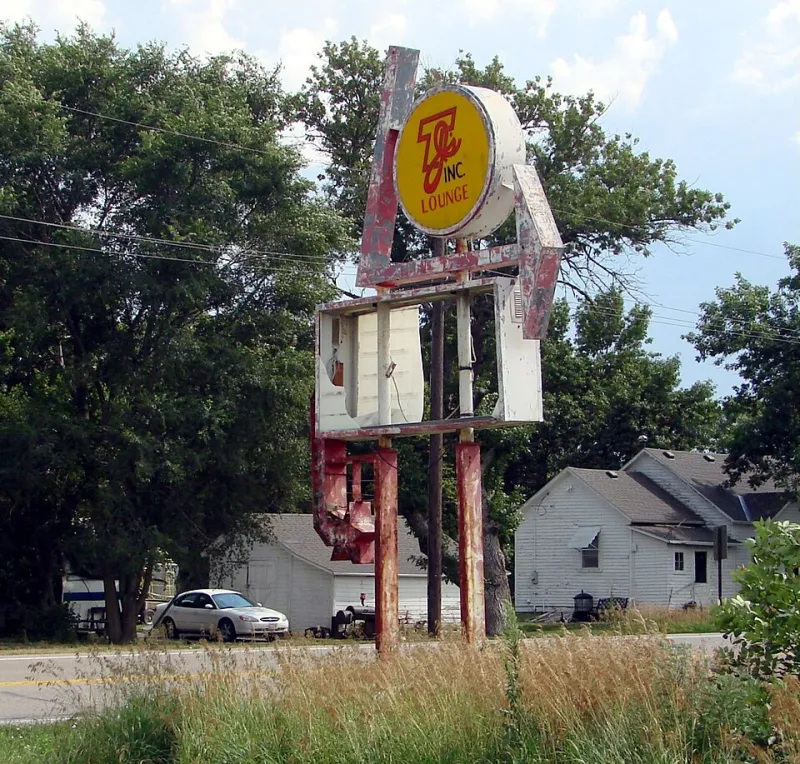
Photo: inkknife_2000 (7.5 million views +), CC BY-SA 2.0, via Wikimedia Commons
Every internet user eventually stumbles into one. You're searching for a lasagna recipe, or the cast of a 1997 TV movie, and suddenly you're staring at a webpage that looks like it was assembled by a very confused robot at 3 a.m. Welcome to the internet's ghost towns.
Here at YMLP299, we know this territory intimately — mostly because we live here. But we're not alone. Not even close.
The Curious Case of the Accidental Domain
Domains get registered for a lot of reasons. Somebody had a great idea in 2011 and a credit card. A company bought a hundred variations of its name to keep squatters at bay. An automated system bulk-registered strings of characters because, statistically, one of them might matter someday.
That last category is where the magic happens. Type in a domain like ours and you might find a parking page, a wall of unrelated links, or — if you're lucky — actual content that arrived there through means nobody fully understands. It's the digital equivalent of finding a fully furnished house where nobody has ever received mail.
The Weird Economics of Doing Nothing
Here's the part that surprises people: these forgotten domains aren't free to run, so somebody, somewhere, is paying for them. Domain speculation — buying names in the hope they'll appreciate — is a real industry. A short domain or a lucky keyword can resell for six figures. Most don't. Most sit there, costing twelve dollars a year, quietly gathering digital dust.
And yet, some of these ghost towns get traffic. Enormous traffic. Auto-generated pages optimized for long-tail search queries can accumulate millions of monthly visitors from people who just wanted to know why their dishwasher smells like eggs. Nobody designed the site. Nobody maintains it. It just... persists. Like a gas station in the desert that somehow always has customers.
A Tour of the Neighborhood
We won't name names — partly for legal reasons, partly because these sites change so fast that any list would be obsolete by lunch. But the categories are reliable:
- The Parking Lot: A single page of "related links" that lead to more parking lots. The internet's version of a Ponzi scheme, but for your patience.
- The Time Capsule: A small business's site from 2004, still advertising a Grand Opening Sale. The phone number has been reassigned twice.
- The Content Machine: Thousands of pages of text that read like a thesaurus was asked to describe bread. Somehow, it ranks on page one.
- The Mystery Box: Sites like ours. No clear purpose, no clear origin, occasionally publishing articles about their own existence. Meta? Sure. But someone has to document the frontier.
Why the Ghost Towns Matter
There's a temptation to see these sites as internet litter — something a good algorithmic cleanup would sweep away. But we'd argue the opposite. The polished, SEO-perfect web all looks the same now. Every recipe site makes you scroll past a 900-word memoir about someone's grandmother before the ingredients appear.
The forgotten domains are the last places where the internet is still genuinely strange. They're a record of every half-formed idea, every speculative purchase, every automated system left running after its creators moved on. That's not litter. That's archaeology.
So the next time you land on a site that makes no sense — a string of letters, a wall of links, an article about websites like itself — take a moment. You're not lost. You've just found one of the internet's ghost towns.
Welcome. Content happens here. Mostly.