Robo-Advisor? Mine Was Just a Number. Month-End Report From the 299 Fund.
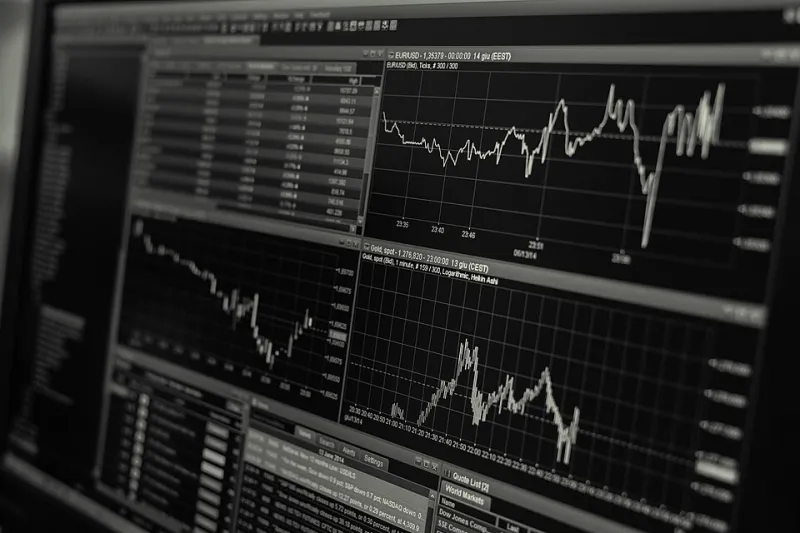
Photo: Unknown authorUnknown author, CC0, via Wikimedia Commons
Somewhere between my third fintech app download of the quarter and a podcast ad that promised 'institutional-grade alpha for everyday Americans,' I had an idea that felt brilliant at 11 p.m. and criminally stupid by morning: I would let the number 299 manage my retirement savings for one month.
Not a robo-advisor. Not an index fund. The number 299 — the same number this website is named after, a number whose only qualification is that it sits one below 300 and has never once asked me about my risk tolerance.
The Rules of the 299 Fund
The system was simple, which is more than I can say for my 401(k) fee structure. Every market day, I'd generate a random number between 1 and 1,000. If it landed anywhere in the 200s, I bought. If it landed in the 300s, I sold. Any other range: do absolutely nothing, which — spoiler — was most days, and honestly the most financially responsible instruction I've ever received.
Asset allocation was also delegated. My 'portfolio' ended up split into three holdings chosen by dice roll: a broad S&P 500 index fund, a single share of a company that makes beige paint, and a savings account earning 0.01% interest that my grandmother would describe as 'basically a mattress.'
The beige paint company was not my choice. It was 299's choice. I have learned not to question it.
Week One: Confidence Is a Drug
The first week, the S&P 500 drifted up about half a percent, and my 299 Fund matched it almost exactly. This is because most of my money was in an S&P 500 fund, but I chose to interpret it as validation. Isn't that the whole trick of active management? Take a market return, add a story, and charge 75 basis points for the privilege?
I told a friend at a barbecue about the experiment. He manages money professionally and laughed in a way that had real pain in it. 'You've just reinvented a coin flip with extra steps,' he said. I reminded him that his firm's model portfolio had underperformed a three-fund lazy portfolio for four of the last five years. He stopped laughing. We ate burgers in silence.
Week Two: The Beige Bet
Mid-month, the RNG demanded I rebalance, and 299's algorithm — which is to say, whatever chaos the dice felt like — moved 15% of the portfolio deeper into the paint company. I checked their investor materials. The word 'beige' appears 47 times. Their flagship product is a color called 'Oat Stucco.'
Here's the uncomfortable part: it went up. Not a lot. But up. Meanwhile I've watched tech companies with 400-person product teams lose 30% in a day because a CEO sneezed on an earnings call. The market does not reward logic. It rewards vibes, and 'Oat Stucco' was apparently having a moment.
Week Three: What Robo-Advisors Actually Do
Around day 18, something clicked. I logged into the actual robo-advisor app I'd used before this experiment and read its disclosure documents properly for the first time. You know what's in there? A questionnaire, a diversified ETF mix, automatic rebalancing, and tax-loss harvesting.
You know what my 299 Fund had? A diversified ETF mix, semi-automatic rebalancing, and a dice.
The difference between 'sophisticated algorithmic wealth management' and 'a number deciding my future' is thinner than anyone in fintech wants to admit. Both systems are, at their core, a set of rules someone made up, executed without judgment, dressed in the language of science. The robo-advisor just has better fonts.
This is not entirely an insult. Rules executed without judgment are genuinely useful — they stop you from panic-selling in a dip or YOLO-ing your IRA into a meme stock at 2 a.m. Automation's real value was never intelligence. It's that a machine doesn't get scared. Neither does 299. That's 299's entire personality.
Week Four: The Results
Final tally, after a month of dice-driven portfolio management:
- The 299 Fund: up 1.8%, thanks almost entirely to the index fund it kept accidentally holding
- The S&P 500: up 1.9%
- The beige paint company: up 4%, inexplicably
- My blood pressure: down significantly, because I checked the app twice a week instead of forty times a day
I underperformed the market by a rounding error. Professional fund managers with Bloomberg terminals and MBAs fail to clear that bar every single year, and they do it while charging fees that would make a payday lender blush.
What 299 Actually Taught Me
Buried in the absurdity are three takeaways I'd defend in front of a CFP:
First, doing nothing is a strategy. Most of my days required no action, and those were my best days. The data on retail investors consistently shows that trading less produces better outcomes. 299 understood this intuitively because 299 understands nothing, which is a kind of wisdom.
Second, the boring stuff carries the portfolio. The index fund did all the work. The exciting holdings were noise. This has been true since before I was born and will be true after every fintech startup currently advertising on my podcast has folded.
Third, no algorithm cares about you. Not the robo-advisor, not the hedge fund quant, and certainly not the number 299. Once you accept that your investments are being managed by something fundamentally indifferent — whether it's a mean-variance optimization model or a random number between 1 and 1,000 — you stop expecting magic and start expecting math.
Closing Positions
On the last day, I liquidated the 299 Fund and rolled everything into the index fund, where it will sit, unmanaged, uncared for, and probably fine.
The beige paint shares I kept. One share. As a reminder that the market is a casino where occasionally the house bets on Oat Stucco and wins.
299, if you're reading this — and you're not, because you're a number — your fees were extremely reasonable and your communication style was impeccable. I'd say you have a future in wealth management, but honestly, so does a dartboard. The evidence suggests there's not much difference.